Eratherm İzolasyon A.Ş.
Flexible Aerogel Blankets · Hot · Cold · Cryogenic

Industrial Aerogel & Cryogel Insulation Systems

ERATHERM provides engineering, material supply and field installation of industrial aerogel and Cryogel insulation systems for hot, cold and cryogenic piping, equipment and process facilities.

Thermal calculation Material supply Field installation QA/QC verification
ASTM C1728 Framework Flexible aerogel insulation selection with project-specific product data.
Hot to Cryogenic Different blanket families selected for the actual service condition.
End-to-End Scope Engineering, procurement, installation and structured field inspection.
Worldwide Projects Support for asset owners, EPC contractors and industrial operators.
Material technology + system engineering

Aerogel Is a Material Platform—not a Complete Insulation System

Aerogel blanket insulation combines a nanoporous silica-based thermal core with a flexible fibrous carrier. Its low thermal conductivity can reduce installed insulation thickness where pipe-rack clearances, equipment geometry, system weight or retrofit constraints make conventional thicknesses difficult to accommodate.

The blanket alone does not determine long-term performance. Correct service classification, temperature-dependent conductivity data, layer arrangement, compression control, vapour management, support detailing, outer cladding and installation quality must be engineered as one system.

ERATHERM therefore develops project-specific aerogel systems instead of treating the material as a catalogue item. The result may be a hot-service blanket, a cold or cryogenic blanket, or a hybrid configuration using aerogel together with cellular glass, removable insulation or another compatible material.
Terminology: “Aerogel” describes the broader insulation technology. Pyrogel and Cryogel are commercial product-family names and are not interchangeable. Final selection is based on the specified service and the current manufacturer data for the selected product.
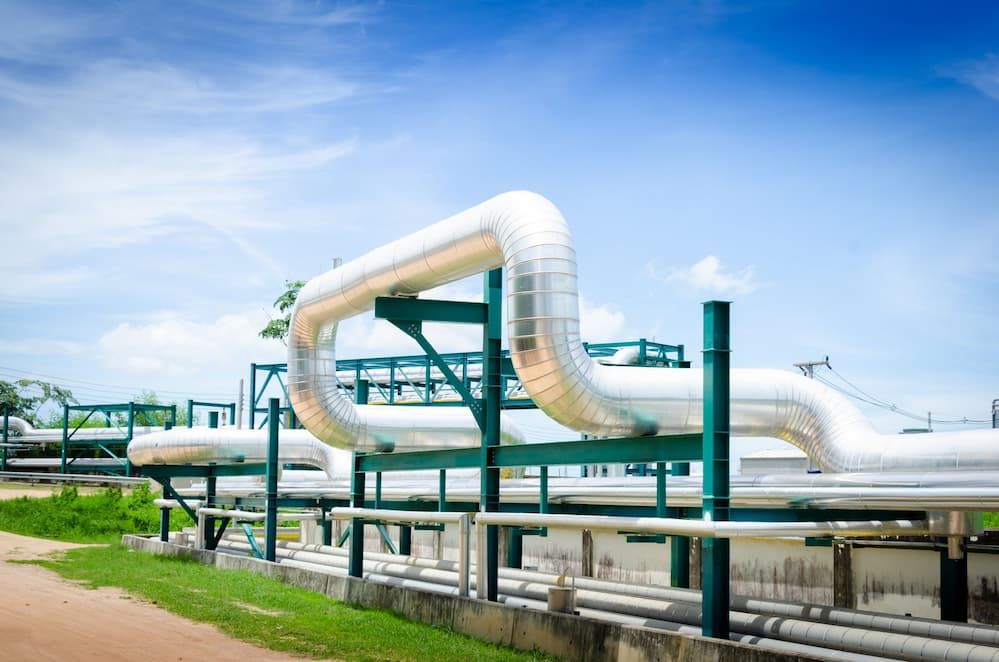
Insulated industrial piping where aerogel blankets can support reduced thickness and condensation-control requirements
Industrial piping systems may use aerogel where congestion, reduced installed thickness, weather exposure and moisture-control requirements must be addressed together.
Engineering + supply + installation

From Project Conditions to a Completed Field System

A single accountable workflow connects thermal design, product selection, procurement and installation. Each step creates a field-ready input for the next.

01 Project Data Review Temperatures, geometry, ambient exposure and project criteria.
02 Thermal Calculation Heat loss or gain, surface condition and condensation checks.
03 Material Selection Product family, layers, thickness and system interfaces.
04 Detail Engineering Joints, supports, vapour stops, terminations and cladding.
05 Material Supply Specified blankets, accessories and outer protection.
06 Field Installation Trained application teams and controlled work fronts.
07 Inspection ITP records, visual checks and performance verification.
Select by service condition

Hot, Cold, Cryogenic or Hybrid?

The word “aerogel” does not define a single universal product. The service condition governs the blanket family, system architecture, vapour-control strategy and installation detail.

Hot-Service Aerogel Blankets

Designed for process temperatures above ambient where reduced thickness, low installed weight, flexibility and water-repellent blanket behaviour can create a project advantage.

Hydrophobic insulation can support a CUI risk-reduction strategy, but it does not replace the required coating, weatherproofing, drainage, detailing and inspection plan.
  • Steam and condensate lines
  • Refinery and petrochemical process piping
  • Vessels, reactors and complex equipment
  • Heat-traced and cyclic-service lines
  • Congested pipe racks and retrofit projects
  • Offshore, marine and weather-exposed assets
  • Turbines and removable insulation interfaces
  • Turnaround projects with restricted work windows
Where aerogel creates value

Specify the Material for a Measurable Project Reason

Aerogel should be selected against project criteria—not because it is universally superior to every conventional insulation material.

01

Reduced Installed Thickness

Helps resolve pipe-rack clearances, cladding diameter limits, access conflicts and compact equipment geometry.

02

Low System Weight

Can reduce insulation and cladding loads where supports, offshore modules or transportable systems are weight-sensitive.

03

Flexible Installation

Blanket form adapts to piping, bends and irregular equipment while supporting efficient cutting and fitting.

04

Retrofit & Turnaround Speed

Thin, flexible layers can simplify work in congested areas and reduce the handling burden during restricted shutdown windows.

05

CUI Risk Management

Appropriate hydrophobic hot-service systems can support a wider corrosion-management plan when all system details are correctly executed.

06

Heat-Gain Control

Cold and cryogenic blankets can support lower heat ingress, condensation control and process stability with a complete vapour system.
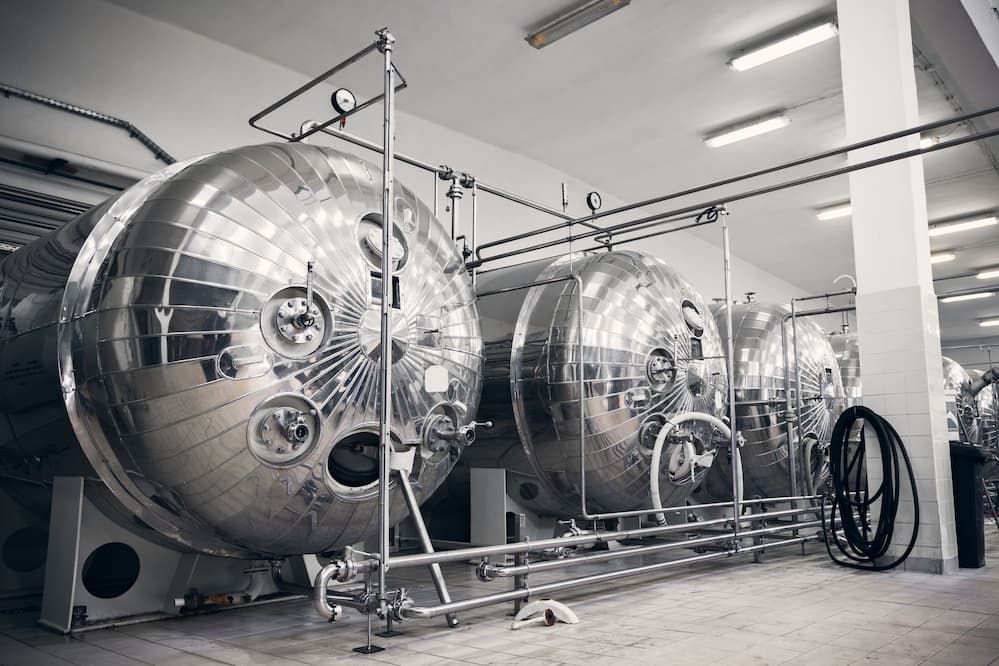
Cryogenic vessels and transfer piping requiring engineered Cryogel insulation and vapour control
Cryogenic performance depends on heat-gain control and long-term resistance to moisture ingress at vessels, piping, nozzles, supports and penetrations.
Cold & cryogenic engineering

Cryogel Is Only One Layer in the Moisture-Control Strategy

Below-ambient insulation is driven by more than nominal thermal conductivity. Warm humid air will move toward the cold surface whenever the system permits it. If vapour enters joints, penetrations or damaged weatherproofing, moisture can condense or freeze within the system and progressively increase heat gain.

ERATHERM designs the complete envelope: blanket layers with staggered joints, sealed seams, vapour-retarder continuity, vapour stops, contraction allowances, insulated supports, compatible mastics and an external cladding or weather barrier suitable for the operating environment.

“Hydrophobic” does not mean that joint sealing and vapour control can be omitted. Product properties and complete-system continuity perform different functions and both must be verified.

Field-ready detailing

The Blanket Is Only One Part of the System

Long-term performance is determined at joints, supports, penetrations and terminations—the places where a material-only specification is least useful.
01
Substrate & coatingSurface preparation and coating system selected for temperature, environment and CUI strategy.
02
Layer configurationCommercial thickness, staggered joints, longitudinal overlaps and controlled blanket compression.
03
Vapour continuityCompatible seals, vapour stops, terminations and repair principles for below-ambient systems.
04
Supports & penetrationsLocal heat paths, contraction, load transfer and inspection access addressed in the detail design.
05
Outer protectionCladding, weather barrier, drainage and mechanical protection selected for the operating environment.
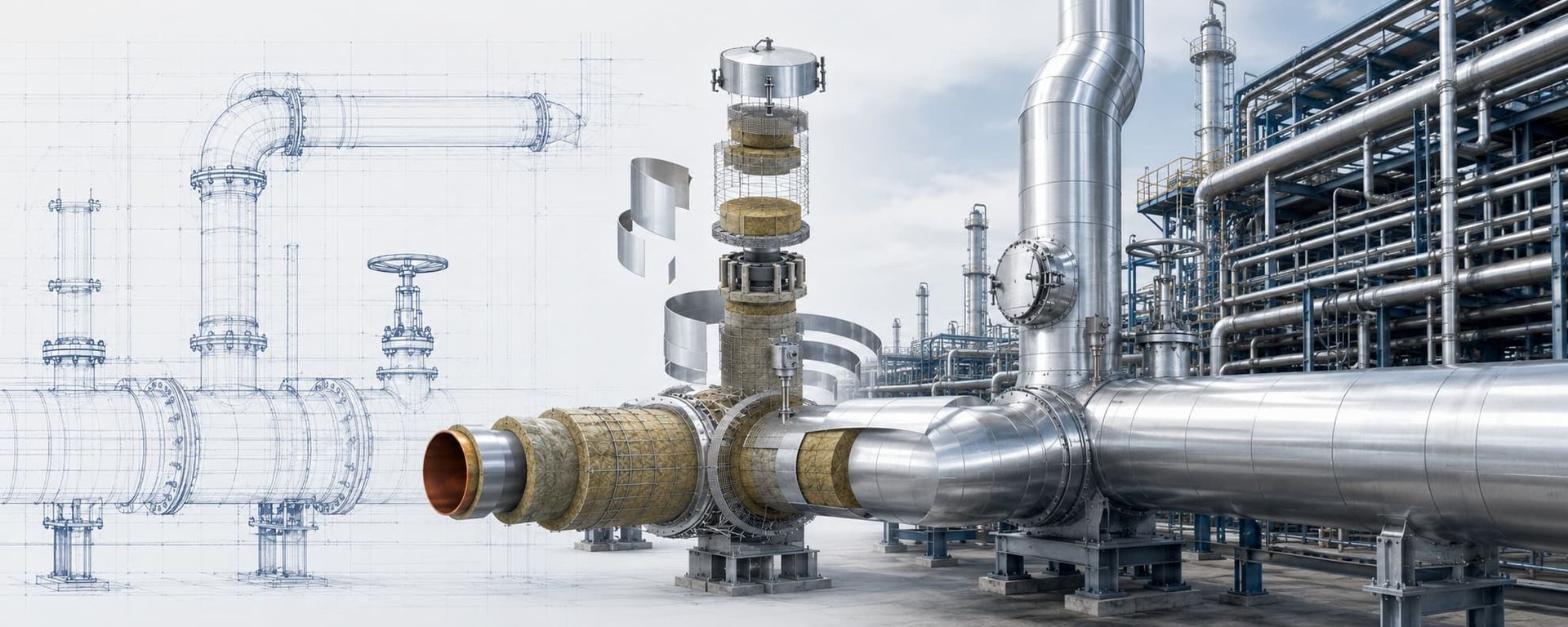
Industrial insulation system development from technical drawing to installed piping and equipment
Equipment geometry, supports and service access must be translated into buildable insulation details before material reaches the work front.
Engineering-based thickness selection

Calculate with Product-Specific λ(T)—Then Select Commercial Layers

Aerogel thickness is not selected from one generic conductivity value. ERATHERM evaluates the manufacturer’s temperature-dependent data together with geometry, ambient exposure and the controlling project criterion.
Process ConditionsOperating and design temperature, fluid condition and duty cycle.
Ambient ExposureTemperature, humidity, wind, solar load and indoor or outdoor location.
Thermal TargetHeat loss, heat gain, boil-off, process stability or freeze-protection criterion.
Surface CriterionPersonnel protection, dew-point margin or maximum external surface condition.
System CorrectionsSupports, penetrations, seams, compression and other thermal bridges.
Commercial SelectionAvailable blanket thicknesses, number of layers and life-cycle comparison.
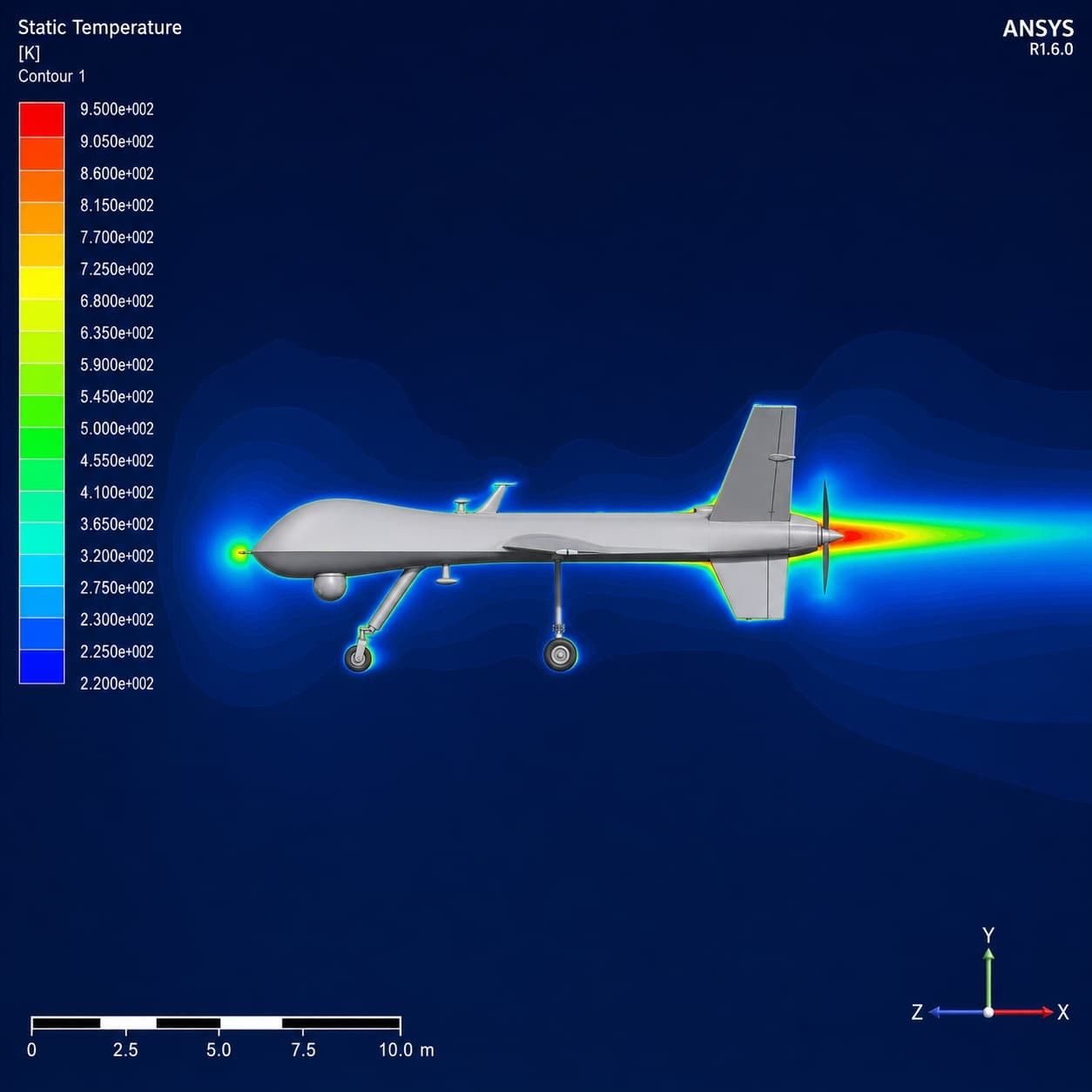
Representative numerical temperature-field simulation demonstrating advanced thermal analysis capability
Model Fidelity Matched to the Question Standard calculations are used where the geometry permits; project-specific 2D or 3D numerical analysis is added where local heat paths or complex boundary conditions materially affect the insulation decision.
Material selection matrix

Aerogel Compared with Conventional Insulation

Final selection considers installed thickness, moisture behaviour, load-bearing requirements, constructability, inspection strategy and life-cycle cost—not thermal conductivity alone.

Material family Typical project advantage Key design consideration Where it may be preferred
Hot-service aerogel blanket Reduced installed thickness, flexibility and low weight. Compression, weatherproofing, product-specific temperature limit and CUI detailing. Congested pipe racks, retrofit, offshore, cyclic service and restricted shutdowns.
Cryogenic aerogel / Cryogel system High thermal performance in a flexible multi-layer configuration. Vapour-retarder continuity, contraction, joints, supports and long-term moisture control. LNG, ammonia, industrial gases and complex cold or cryogenic geometry.
Mineral wool Broad availability and economical coverage of large hot-service areas. Installed thickness, water management, mechanical protection and CUI strategy. Uncongested hot piping and equipment where conventional thickness is acceptable.
PIR / PUR Efficient rigid-foam solution for many cold-service applications. Joint quality, vapour barrier, fire strategy, service temperature and mechanical protection. Cold piping, equipment and panelised systems within applicable product limits.
Cellular glass Closed-cell, rigid and load-capable insulation with strong vapour resistance. Fabrication, joint sealant, abrasion layer, movement and local stress control. Tank bottoms, supports, load-bearing zones and robust cold or cryogenic systems.
Hybrid system Places high-performance material only where it creates measurable value. Material compatibility and clear allocation of thermal, vapour and structural functions. Thermal bridges, local clearance problems, maintenance zones and project-specific details.

This is an engineering comparison, not a universal ranking. Actual performance depends on the selected product, temperature range, thickness, installation details and project environment.

Hybrid insulation engineering

Use Aerogel Where It Solves the Problem

A well-designed hybrid system can use cellular glass for load-bearing or vapour-resistant zones and aerogel for local clearance, geometric flexibility or reduced heat flow. Other projects may use aerogel at supports, nozzles and difficult interfaces while retaining an economical conventional system over large unobstructed surfaces.

ERATHERM defines the function of every material layer and checks interface compatibility, movement, sealing, weather protection and field installation sequence. This avoids the common mistake of placing individually suitable products together without an integrated system design.
Cellular glass insulation detail that can be integrated with an aerogel hybrid system
Hybrid solutions combine material functions deliberately—for example, load-bearing cellular glass and flexible aerogel at critical interfaces.
Industrial applications

Aerogel Insulation Across Process Industries

System selection is tailored to the process fluid, asset geometry, operating cycle, environmental exposure and maintenance strategy of each facility.
Refinery & PetrochemicalHot piping, reactors, steam systems, cyclic service, CUI-critical assets and congested revamps.
LNG & Industrial GasesCold and cryogenic piping, vessels, valves, flanges, air-separation units and transfer systems.
Power Plants & TurbinesSteam lines, turbine interfaces, removable systems, high-temperature equipment and outage work.
Offshore & MarineWeight-sensitive modules, weather exposure, space limitations, cold systems and maintenance access.
Chemical & FertilizerProcess piping, ammonia service, reactors, temperature-controlled equipment and retrofit projects.
Cryogenic StorageTank-associated piping, equipment, supports, penetrations and transfer connections.
Turnaround & MaintenanceRestricted work windows, congested areas, local repair, inspection access and rapid installation.
Special Engineered SystemsThermal bridges, removable covers, hybrid material arrangements and geometry-specific solutions.
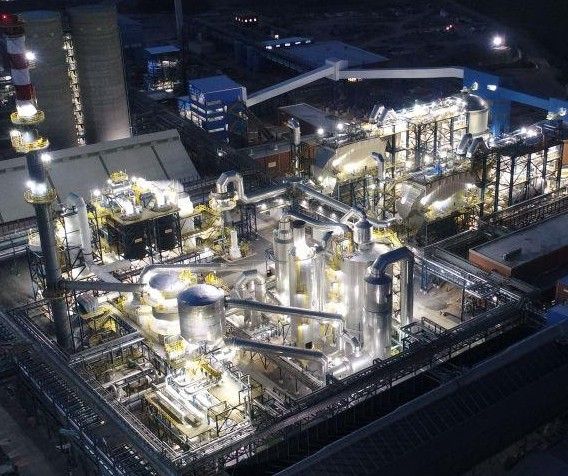
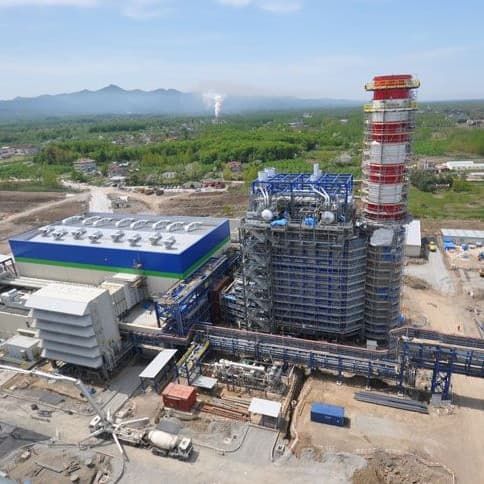
Industrial power and process plant requiring aerogel insulation engineering material supply and installation
ERATHERM connects design deliverables to procurement, installation and verification for complete industrial insulation packages.
Project deliverables

Engineering Outputs That Can Be Procured and Built

The scope can be adapted from material-selection support to a complete engineered supply-and-installation package.

Design Basis & Thermal CalculationInputs, assumptions, material data, heat-transfer results and design criteria.
Material & Thickness MatrixService-by-service product family, commercial layers and system notes.
Project SpecificationMaterials, workmanship, vapour control, cladding, inspection and acceptance requirements.
Typical Installation DetailsJoints, supports, terminations, penetrations, removable zones and repair principles.
BOQ & Material Take-OffBlankets, accessories, vapour materials, cladding and installation allowances.
Method Statement & ITPWork sequence, hold points, inspection records and acceptance criteria.
Field InstallationSite execution, supervision, workmanship control and interface coordination.
Verification & As-Built RecordsInspection dossiers, punch closure and optional thermographic verification.
Start with project conditions

Submit the Data Needed for an Engineered Aerogel Solution

Share the available line list, equipment data, drawings, BOQ or site photographs. ERATHERM will define missing inputs, review viable system options and establish the next engineering step.

  • Operating and design temperature
  • Pipe or equipment dimensions
  • Process fluid and service condition
  • Ambient temperature and humidity
  • Indoor, outdoor, marine or buried location
  • Heat-loss, heat-gain or surface criterion
  • Existing insulation and coating condition
  • New installation or retrofit scope
  • Drawings, line list or BOQ
  • Project location and schedule
Frequently asked questions

Industrial Aerogel & Cryogel Insulation FAQ

What is industrial aerogel insulation?
Industrial aerogel insulation is commonly supplied as a flexible blanket in which a nanoporous silica-based thermal material is supported by a fibrous carrier. It is used where thermal performance, reduced thickness, low weight or geometric flexibility provides a project advantage.
What is the difference between aerogel, Pyrogel and Cryogel?
Aerogel describes the broader material technology. Pyrogel and Cryogel are commercial product-family names developed for different service conditions. They should not be treated as interchangeable, and the final product must be selected from current manufacturer data for the actual operating temperature and system requirements.
Can aerogel insulation prevent corrosion under insulation?
No insulation material can by itself guarantee that CUI will not occur. A suitable hydrophobic hot-service blanket can support a CUI risk-reduction strategy when combined with the correct substrate coating, weatherproofing, drainage, detailing, inspection access and maintenance plan.
Is Cryogel suitable for LNG and cryogenic piping?
Cryogenic aerogel blankets can be suitable for LNG and other cryogenic piping and equipment when the selected product is within its declared service range and the complete system addresses heat gain, vapour continuity, joints, supports, contraction, penetrations and outer protection.
How is aerogel insulation thickness calculated?
Thickness is calculated using process temperature, geometry, ambient conditions, convection, radiation, cladding properties and product-specific temperature-dependent conductivity data. Commercial blanket layers are then checked against heat-loss or heat-gain, surface-temperature, condensation, process and economic criteria.
Is aerogel always better than conventional insulation?
No. Aerogel can create strong value in constrained, weight-sensitive, complex or high-performance applications. Conventional materials may be more economical for large unobstructed areas, load-bearing zones or projects where greater installed thickness is acceptable. ERATHERM compares the complete installed and life-cycle system.
Does a hydrophobic Cryogel blanket replace the vapour barrier?
No. Hydrophobic material behaviour and vapour-retarder continuity are different functions. Below-ambient systems still require project-specific joint sealing, penetrations, terminations, vapour stops and external protection to limit long-term moisture ingress.
Can ERATHERM supply and install the complete aerogel insulation system?
Yes. The scope can include project data review, thermal calculation, material and thickness selection, detail engineering, procurement, field installation, inspection, QA/QC records and optional performance verification.
Which information is needed for an aerogel proposal?
Useful inputs include operating and design temperature, process fluid, pipe or equipment dimensions, ambient conditions, project location, existing insulation condition, heat-transfer or surface criterion, drawings, line list, BOQ, photographs and the required schedule.
One accountable technical scope

From Thermal Design to Completed Aerogel Installation

Send your operating conditions, drawings or BOQ. ERATHERM will develop the insulation configuration, determine the material and thickness, supply the specified system and execute the field installation under a structured QA/QC plan.

Aerogel, Pyrogel and Cryogel names are used for technical identification. Product availability, service limits, declared properties and system compatibility are verified against current manufacturer documentation and project requirements. ERATHERM does not present itself on this page as the manufacturer of those products.