Owner's Inspection
Technical surveillance and acceptance support on behalf of the owner, checking contractor work against contract requirements, approved documents and the ITP.
Owner-side assuranceERATHERM provides owner-side inspection, construction QA/QC and project-defined TPI support for hot, cold and cryogenic insulation systems—from document review and material receiving inspection to final acceptance and quality-dossier close-out.
Many critical insulation defects disappear from view as soon as the next layer or metal cladding is installed. Incorrect material, insufficient thickness, aligned joints, uncontrolled blanket compression, incomplete vapour retarders, poorly formed vapour stops and unsealed support details may remain hidden until heat loss, condensation, icing, water ingress or premature deterioration becomes visible in service.
Effective inspection therefore follows the construction sequence. Documents and materials are checked before installation; the substrate is released before concealment; each critical layer is inspected at the approved hold, witness or surveillance point; and nonconformities are closed before the next stage.
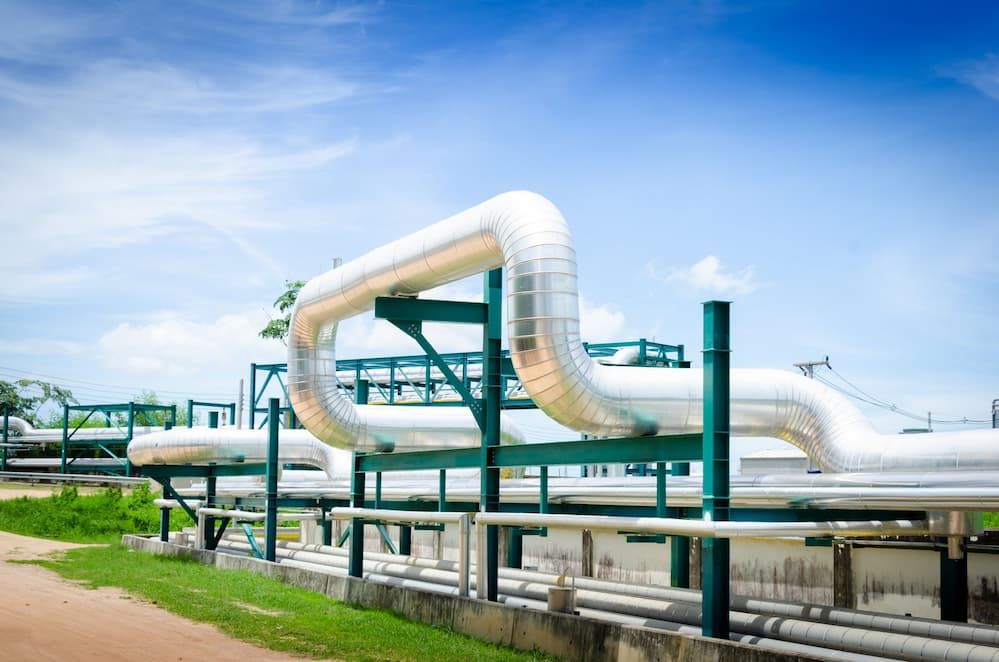

ERATHERM's inspection approach is built on direct experience in insulation engineering, detail design, material selection, procurement, prefabrication and field application. This background allows our inspectors to evaluate not only whether a detail looks correct, but whether it is thermally appropriate, constructible, maintainable and consistent with the specified long-term performance.
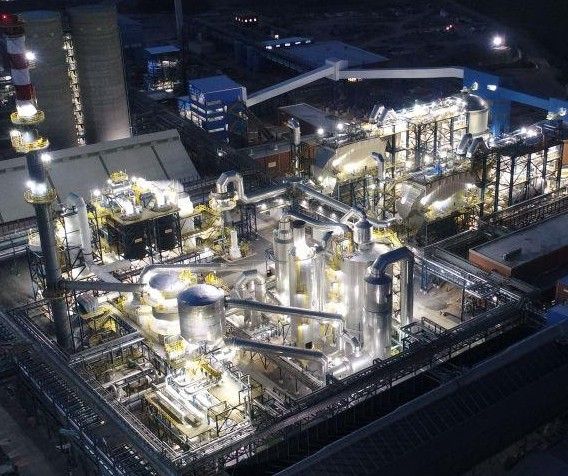
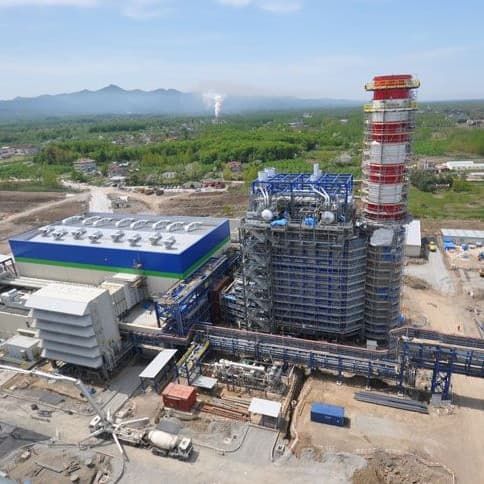
Across power generation, refinery and petrochemical, mining and metallurgy, cement, MDF, marine and critical infrastructure projects, our teams have successfully completed more than 1,000,000 m² of insulation. The resulting lessons are applied to new construction, maintenance, retrofit and turnaround inspection programmes.
This integrated perspective is especially valuable at supports, nozzles, penetrations, expansion joints, removable covers, vapour-barrier terminations and cladding interfaces—areas where a specification clause must be translated into a practical field detail.
Roles, reporting lines, inspection authority and independence are defined before mobilisation so every release and record has a clear project meaning.
Technical surveillance and acceptance support on behalf of the owner, checking contractor work against contract requirements, approved documents and the ITP.
Owner-side assurancePreparation and administration of ITPs, inspection requests, field records, NCRs, punch items and turnover documentation within the contractor's quality system.
Project quality executionThird-party inspection at agreed hold and witness points where ERATHERM is not the executing insulation contractor and the required impartiality is defined by the project.
Defined independent scopeThe inspection plan follows the physical sequence of the work and retains objective evidence at every critical transition.
The detailed checklist is project-specific. These control groups provide a practical baseline for hot, cold and cryogenic insulation work.
Materials are verified before they enter the work front, preventing unapproved or damaged products from being concealed within the completed system.
The substrate and connected disciplines are checked before insulation hides the surface and makes later verification difficult or impossible.
Material fit-up and workmanship are checked before the next layer closes the system and again before final cladding acceptance.
Below-ambient systems require continuous control of moisture ingress, thermal bridges and dimensional movement in addition to basic thickness and workmanship checks.
Inspection intensity and record frequency are adapted to system criticality, production rate, concealment risk and the approved ITP.

Each ITP activity identifies the acceptance criterion, inspection frequency, responsible parties, notification rule and record needed for release.
Work cannot proceed beyond the defined stage until the required inspection and formal release are completed.
The inspector is notified and given the opportunity to attend; progression follows the rules stated in the approved ITP.
Periodic or random monitoring is performed without routinely stopping the active work front.
A document, certificate, report or inspection record is checked for completeness and compliance.
The ITP converts the specification and construction sequence into auditable inspection actions and records.
| ITP Field | Purpose | Typical Insulation Example | Resulting Record |
|---|---|---|---|
| Activity | Defines the construction or inspection stage. | Material receiving, substrate release, first layer, vapour barrier or cladding. | Inspection request / checklist |
| Inspection Characteristic | States exactly what will be verified. | Material identity, thickness, staggered joints, seal continuity or lap direction. | Measured or observed result |
| Acceptance Criterion | Identifies the requirement used for pass/fail. | Project specification clause, approved drawing, datasheet or method statement. | Accepted / rejected status |
| Frequency | Defines sample size or inspection coverage. | Every delivery, first-off detail, each work area, defined percentage or 100%. | Traceable inspection extent |
| Responsibility & Point | Allocates inspection roles and H/W/S/R status. | Contractor QC, EPC, owner, consultant or project-defined third party. | Notification and release signatures |
| Required Record | Preserves objective evidence for turnover. | MIR, WIR, field report, photo register, NCR, punch record or release note. | Quality dossier entry |
The exact point codes, signatory roles and progression rules must match the approved project quality plan and contract terminology.
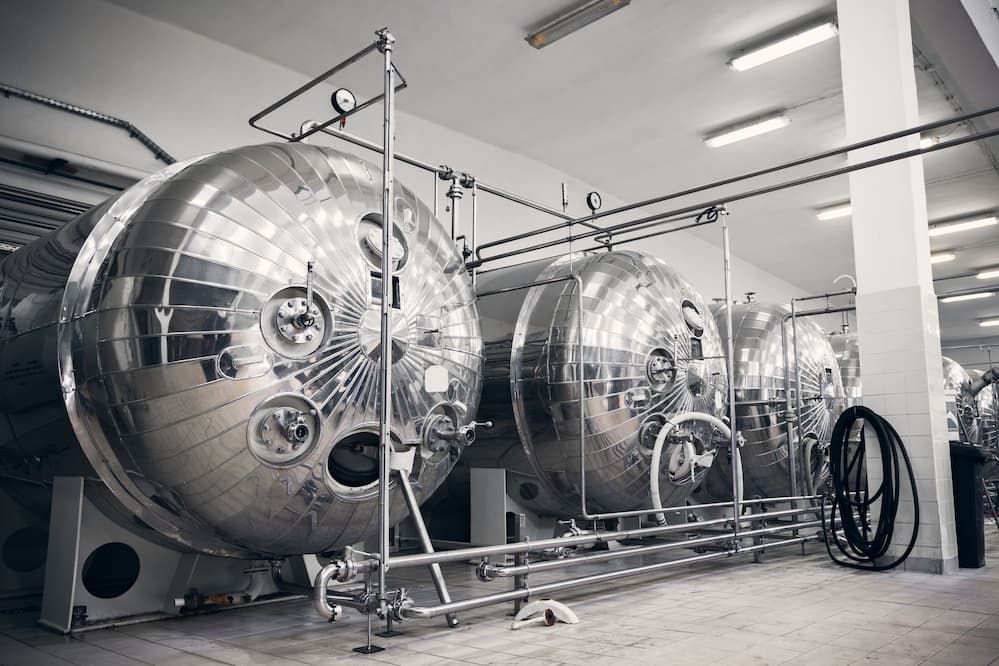
In cold and cryogenic service, moisture is driven toward the cold surface through every unsealed seam, penetration or damaged termination. Water vapour may condense or freeze inside the insulation, increasing heat gain and contributing to external condensation, icing, process instability or material degradation.
ERATHERM inspection plans therefore include layer staggering, vapour-retarder continuity, vapour stops, contraction details, sealed penetrations, load-bearing insulation at supports and compatible weather protection. Critical details are inspected before they become inaccessible.
Post-start-up screening can help identify cold spots or condensation, but it does not replace documented layer-by-layer inspection during construction.
Infrared thermography may be used after stable operation as a screening and comparative verification tool. It can help prioritise hot spots, cold spots, suspected missing insulation, thermal bridges or areas requiring closer investigation and can compare conditions before and after repair.
Results are influenced by cladding emissivity, reflected radiation, viewing angle, process load, wind, solar exposure and ambient temperature. Thermography is therefore interpreted alongside operating data, visual inspection, construction records and the limitations of the measurement method.
Standards support the inspection framework, but pass/fail decisions follow the contractual and approved project documents in their defined order of precedence.
Project-specified guidance for the design, execution and inspection quality of industrial insulation systems.
System-level corrosion-under-insulation risk management, inspection and mitigation context where contractually referenced.
Dimensional coordination for fitting covers and preformed pipe-insulation systems where applicable.
Thermal calculation and performance-checking references—not generic workmanship acceptance standards.
Evaluation framework for contact-temperature and hot-surface burn-risk considerations where required.
Deliverables are tailored to the contract, quality plan, project document-control system and required turnover structure.
ERATHERM combines design understanding with construction experience to support owners, EPC contractors and operators across new-build, retrofit, maintenance and turnaround programmes.
Share the available scope and quality documents. ERATHERM will define the engagement model, mobilisation basis, inspection coverage, reporting structure and required deliverables.
Send your project specification, ITP, drawings and schedule. ERATHERM will prepare an inspection proposal aligned with the required service model, site coverage, acceptance points and turnover records.
TPI, inspection and QA/QC scopes are project-defined. References to standards describe a potential technical framework and do not represent universal applicability, certification or accreditation. Contract requirements, approved project documents and verified inspector qualifications govern each assignment. Company names are cited only to describe ERATHERM's experience on projects involving those organisations and do not imply endorsement, current affiliation or a direct contractual relationship in every case.