Multi-Layer Insulation (MLI) Engineering, Supply & Installation
ERATHERM provides an end-to-end multi-layer insulation engineering solution for spacecraft, thermal-vacuum facilities, cryogenic vessels, vacuum-jacketed piping and advanced test systems. We convert mission, process and geometry inputs into a verified MLI architecture; prepare blanket patterns and interface details; supply qualified reflector, spacer, cover and attachment materials; and perform fabrication, installation, inspection and thermal-vacuum verification. One accountable team carries the system from design basis and heat-leak calculation through material traceability, site integration and as-built records.
 Engineering → Supply → Installation
MLI Is More Than Reflective Foil
Multi-layer insulation reduces radiative heat transfer by combining low-emittance reflectors, low-conductivity spacers and controlled layer contact in a vacuum environment. Actual performance depends on the complete installed system—not on foil data alone.
- Thermal architecture — hot/cold boundaries, radiation environment, vacuum level and allowable heat leak
- Blanket construction — reflector, spacer, outer cover, layer density, seams, overlaps and venting
- Interfaces — supports, penetrations, nozzles, harnesses, brackets, grounding and removable access
- Execution — clean fabrication, traceable supply, controlled installation, inspection and test
Design boundary: MLI delivers its characteristic performance only in a suitable vacuum. Atmospheric or soft-vacuum service requires a different or hybrid insulation assessment.
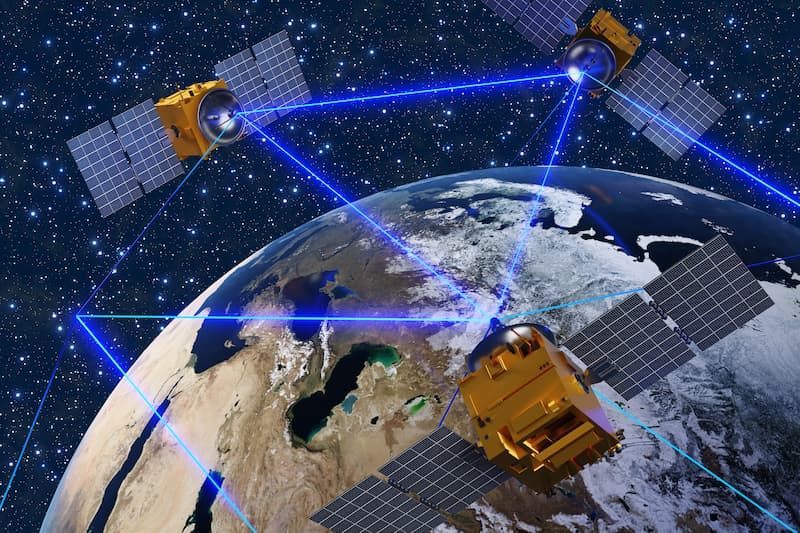
Satellite MLI & thermal controlOne MLI Discipline, Three Different Design Contexts
The same reflective-layer principle is engineered differently for flight hardware, ground-test facilities and vacuum-insulated cryogenic equipment.
Mission-specific blanket zoning, thermo-optical properties, contamination limits, venting, electrical bonding, launch loads, atomic-oxygen and radiation exposure where applicable.
Chamber shrouds, cold surfaces, test articles and removable interfaces designed for repeatable cycling, cleanliness, access and contamination control.
LH₂, LOX, LN₂, LNG and helium vessels, cryostats and vacuum-jacketed lines designed around heat leak, boil-off, vacuum life, supports and oxygen compatibility.
From Thermal Requirements to Installed and Verified MLI
ERATHERM can deliver the entire scope under one responsibility: calculations, system design, material and blanket supply, fabrication, installation, QA/QC and performance verification.
01 · Requirements & Thermal Model
Boundary temperatures, radiation environment, vacuum pressure, geometry, allowable heat leak, boil-off or component-temperature limits are converted into a documented design basis and thermal network/model.
Thermal engineering02 · MLI Architecture & Detail Design
Reflector and spacer system, layer density, blanket zoning, overlaps, seams, cut-outs, vent paths, attachment points, grounding and thermal-bridge details are engineered for the actual geometry.
03 · Material Engineering & Qualification
Reflectors, spacers, outer covers, tapes, fasteners and accessories are selected for temperature, vacuum compatibility, outgassing, oxygen compatibility, contamination, durability and project-specific fire or electrical requirements.
04 · Material & Blanket Supply
ERATHERM supplies project-qualified MLI films, spacers, blanket covers, tapes, closures, grounding components and installation accessories—or geometry-specific prefabricated blanket assemblies with certificates and traceability.
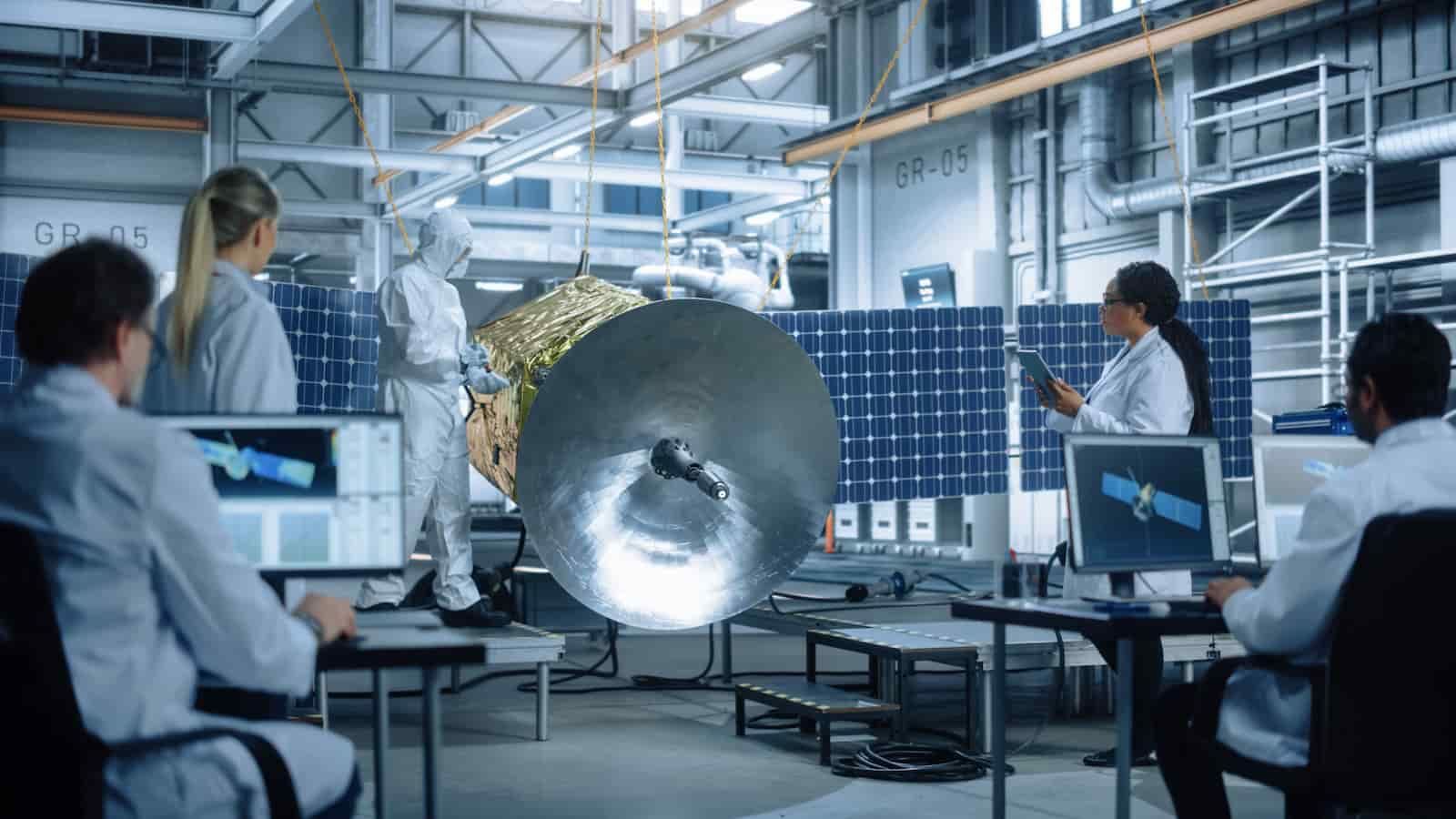
MLI materials05 · Fabrication, Installation & Integration
Controlled cutting and assembly, clean handling, layer-density control, seam and overlap execution, penetration treatment, support interfaces and damage-free integration are performed to approved drawings and procedures.
Field implementation06 · QA/QC, Test & As-Built
Incoming-material checks, in-process inspection, blanket and installation records, vacuum leak or pressure-rise testing where applicable, thermal verification, punch-list closure and as-built dossiers complete the system.

Reflector + Spacer + Interfaces + Vacuum
Layer count is only one variable. ERATHERM designs the complete thermal blanket and every interface that can create a radiative or conductive bypass:
- Reflector system — single- or double-aluminized polymer film or project-approved foil selected for temperature and environment
- Spacer system — low-conductivity netting, scrim or paper that controls layer contact and compression
- Blanket construction — outer covers, vent paths, edges, seams, overlaps, closures and identification
- Geometry & interfaces — nozzles, brackets, harnesses, supports, access panels, fasteners and bonding points
- Installed density — controlled to prevent both radiative gaps and excessive solid conduction
The Documents That Make MLI Fabrication- and Installation-Ready
The design package links thermal intent to materials, blanket geometry, field execution and inspection records.
Temperatures, vacuum regime, geometry, loads, cleanliness, access, acceptance criteria and discipline boundaries.
Radiation, residual-gas conduction and solid-conduction paths with design margins and sensitivity cases.
Material stack, number/density of layers, blanket zoning and environment-specific configuration.
Panel geometry, seams, overlaps, cut-outs, closures, labels, removable sections and installation sequence.
Supports, nozzles, penetrations, sensors, harnesses, brackets, venting, grounding and thermal-break details.
Qualified product requirements, quantities, certificates, traceability and approved-equivalent process.
Clean handling, fabrication, installation tolerances, hold points, inspection criteria and repair procedures.
Inspection records, vacuum and thermal test results where applicable, NCR/punch closure and final configuration.
Specified, Supplied and Installed as One Traceable System
ERATHERM aligns material procurement with the approved thermal model, drawing set and project acceptance criteria.
Aluminized PET or polyimide and other project-approved reflector constructions, supplied to the required width, thickness and surface configuration.
Low-conductivity net, scrim, tissue or paper systems selected for temperature, compression and cleanliness requirements.
Outer cover films or fabrics, tapes, hook-and-loop, tabs, lacing, fasteners and removable-access components.
Geometry-specific blanket panels manufactured, numbered, packed and delivered to approved patterns and installation sequence.
Product data, batch/lot information and available test evidence compiled against the approved material submittal.
ASTM E595 and ECSS-Q-ST-70-02C are applied where required; acceptance limits remain mission- and project-specific.
LOX and oxygen-enriched interfaces are subject to project-specific compatibility, cleanliness and ignition-risk assessment.
Only approved tapes, adhesives, fasteners, grounding items and cleaning materials enter the controlled installation process.
Technical accuracy: No material is literally “outgassing-free.” Vacuum-service materials are screened and selected for sufficiently low outgassing under the applicable mission or project criteria.
MLI Systems for Space, Vacuum and Cryogenic Assets
The system is adapted to each asset's thermal objective, geometry, access, cleanliness, vacuum regime and operating cycle.
External and internal blanket zones, payloads, instruments, tanks, propulsion interfaces and temperature-sensitive subsystems.
Thermal-vacuum chambers, cold shrouds, test fixtures and removable blankets for qualification and acceptance campaigns.
Vacuum-insulated storage and process equipment for LH₂, LOX, LN₂, LNG, argon and helium service.
Transfer lines, bayonets, flexible sections, valves and equipment interfaces engineered for controlled heat leak and vacuum life.
Superconducting magnets, laboratory cryostats, fusion and particle-physics equipment and low-temperature instruments.
Rocket-propellant test systems, ground-support equipment and cryogenic loading infrastructure.
Vacuum, cryogenic and thermal test assets requiring controlled materials, documentation and secure field execution.
MLI combined with vacuum jackets, radiation shields, aerogel, cellular glass or other insulation where system conditions require it.
Project-Tailored MLI Engineering Within the Applicable Standard Set
No single standard defines every MLI blanket. The governing framework is selected from the asset, mission, fluid, pressure boundary, customer specification and verification plan.
Thermal-control requirements covering definition, analysis, design, manufacture and verification of spacecraft thermal-control subsystems.
Thermal-vacuum outgassing test for screening materials proposed for spacecraft and associated equipment.
Screening test method for total mass loss and collected volatile condensable materials in vacuum.
Electrical bonding requirements relevant to conductive MLI blankets when invoked by the project.
Design, fabrication, inspection and testing framework for applicable static vacuum-insulated cryogenic vessels.
Piping design and coordination framework for vacuum-jacketed and cryogenic-line interfaces, where contractually applicable.
Pressure-vessel requirements for applicable vessel boundaries; MLI does not replace pressure-boundary verification.
LOX and oxygen-enriched systems require dedicated material compatibility, cleaning and contamination-control requirements.
Analytical MLI models, thermal networks and project-appropriate FEA/CFD tools support design and sensitivity assessment.
Standards are applied only when relevant to the equipment and contract. Final acceptance criteria are established in the approved project design basis and verification plan.
MLI Engineering and Field Application for TVAC Infrastructure
Thermal-vacuum chambers simulate the vacuum and controlled thermal environment required for spacecraft and component qualification. On a national satellite test-center project, ERATHERM combined vacuum-compatible material selection, MLI engineering, field installation and inspection within one delivery scope.
The reference is important because it closes the loop between calculation and installation: blanket geometry, penetrations, seams, access needs, clean handling and actual site interfaces were managed by a team able to feed field findings back into the engineering package.
Engineering and Field Execution Across Industry & Space
ERATHERM combines thermal engineering, material management and application experience developed across critical industrial, energy, defense and space infrastructure.

































Reference logos indicate ERATHERM's wider engineering and field-application portfolio; the exact scope and MLI relevance vary by project.
Why Clients Choose One Team for the Complete MLI Scope
The value lies in keeping thermal intent, material selection, fabrication, installation and verification aligned throughout the project.
One coordinated basis from thermal calculation and detail design through installation and as-built closeout.
Shop drawings and procedures are shaped by real fabrication, access, interface and installation constraints.
Qualified films, spacers, covers, closures and accessories—or prefabricated blankets—supplied with traceability.
Layer density, overlaps, penetrations, cleanliness and damage prevention managed through approved procedures.
Thermal, mechanical, vacuum, piping, structural, electrical bonding and cleanliness interfaces are documented.
Inspection points, test evidence, repair records, punch closure and final configuration compiled into a project dossier.
Related Space, Cryogenic & Insulation Engineering
Explore focused pages for spacecraft thermal control, TVAC, cryogenic systems, detail engineering, materials and field services.
Space · Defense · Nuclear
Engineering & Materials
Multi-Layer Insulation Engineering — Common Questions
What is Multi-Layer Insulation (MLI)?
MLI is a vacuum insulation system made from multiple low-emittance reflector layers separated by low-conductivity spacers. It primarily reduces radiative heat transfer; vacuum suppresses gas conduction and convection.
Does MLI work without vacuum?
MLI delivers its characteristic performance only in an appropriate vacuum. At atmospheric pressure, gas conduction between layers can dominate, so an atmospheric or hybrid insulation system must be evaluated instead.
How is the required number of MLI layers determined?
Layer count is calculated from boundary temperatures, vacuum pressure, allowable heat leak, geometry, layer materials, installed density, seams and conductive interfaces. More layers are not automatically better because excessive compression and contact can increase solid conduction.
Can ERATHERM provide MLI design, materials and installation together?
Yes. ERATHERM can deliver thermal modelling, MLI architecture, detail drawings, BOM/MTO, qualified material or prefabricated blanket supply, fabrication, field installation, QA/QC, applicable testing and as-built documentation under one coordinated scope.
Which MLI materials can ERATHERM supply?
Depending on the project, the supply can include aluminized reflector films, spacer nets or papers, outer blanket covers, tapes, closures, fasteners, grounding components, identification items, installation consumables and geometry-specific prefabricated blankets.
What is included in an MLI engineering package?
Typical deliverables include the design basis, thermal and heat-leak report, layer and zone schedule, blanket patterns, seam and penetration details, attachment and grounding details, material specification, BOM/MTO, method statement, ITP, test records and as-built dossier.
What does low-outgassing material mean?
All materials release some volatile content in vacuum. Low-outgassing materials are screened against the applicable project criteria, often using ASTM E595 or ECSS-Q-ST-70-02C test data. The test method itself does not create one universal acceptance limit for every mission.
Can MLI be used for spacecraft and cryogenic systems?
Yes, but the design is different. Spacecraft blankets address mission radiation, contamination, venting, launch loads and electrical bonding; cryogenic vacuum systems focus on heat leak, boil-off, supports, vacuum life, pressure-boundary interfaces and fluid compatibility.
How are seams, penetrations and supports handled?
They are treated as engineered thermal interfaces. Blanket overlaps, cut-outs, closures, vent paths and local reinforcement are coordinated with nozzles, brackets, harnesses, supports, sensors and access requirements to limit radiative gaps and conductive bridges.
How is installed MLI performance verified?
Verification can include material and traceability checks, layer-density and workmanship inspection, blanket configuration records, vacuum leak or pressure-rise tests, temperature or heat-leak testing, thermal-vacuum testing where applicable, punch-list closure and as-built documentation.
One MLI Partner from Calculation to Final Installation
Share your temperatures, vacuum regime, geometry, allowable heat leak and project requirements. ERATHERM will define the engineering, material supply, fabrication, installation and verification scope.