
Condition survey and inventory
Walk-down inventory of what exists, what is missing and what is damaged, recorded by line and equipment number rather than by area.

On an operating plant the insulation that was calculated at design stage is no longer the insulation you have. Sections are missing after maintenance, cladding is open, valves and flanges were never reinstated and wet insulation is quietly costing more than the original thickness decision ever saved. ERATHERM surveys what is actually there, quantifies the loss component by component, and executes repair, replacement and upgrade around your production schedule rather than around the insulation scope. We work worldwide, in EPC-level English.
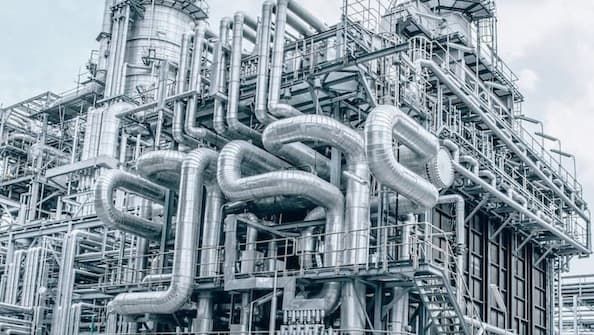
Each package below is defined by what it delivers and by how much of your plant has to stop for it. Most of this work is done without an outage.
Walk-down inventory of what exists, what is missing and what is damaged, recorded by line and equipment number rather than by area.
Infrared survey with calculated loss per component, so the repair scope is ranked by saving against cost instead of by how visible the damage is.
Section replacement, cladding repair, resealing and reinstatement of insulation removed for maintenance and never put back.
Removable jackets for the components most often left bare, where the loss per square metre is the highest on the plant.
Identification and removal of saturated insulation, inspection of the substrate underneath and reinstatement with a corrected vapour barrier and cladding strategy.
Thickness and material upgrade where the calculation shows a payback, with the annual saving, the emissions reduction and the investment stated before the work is approved.
Survey, mapping, jacket manufacture, valve and flange treatment and most cladding repair are carried out with the plant running. Only the scope that needs isolation waits for a window.
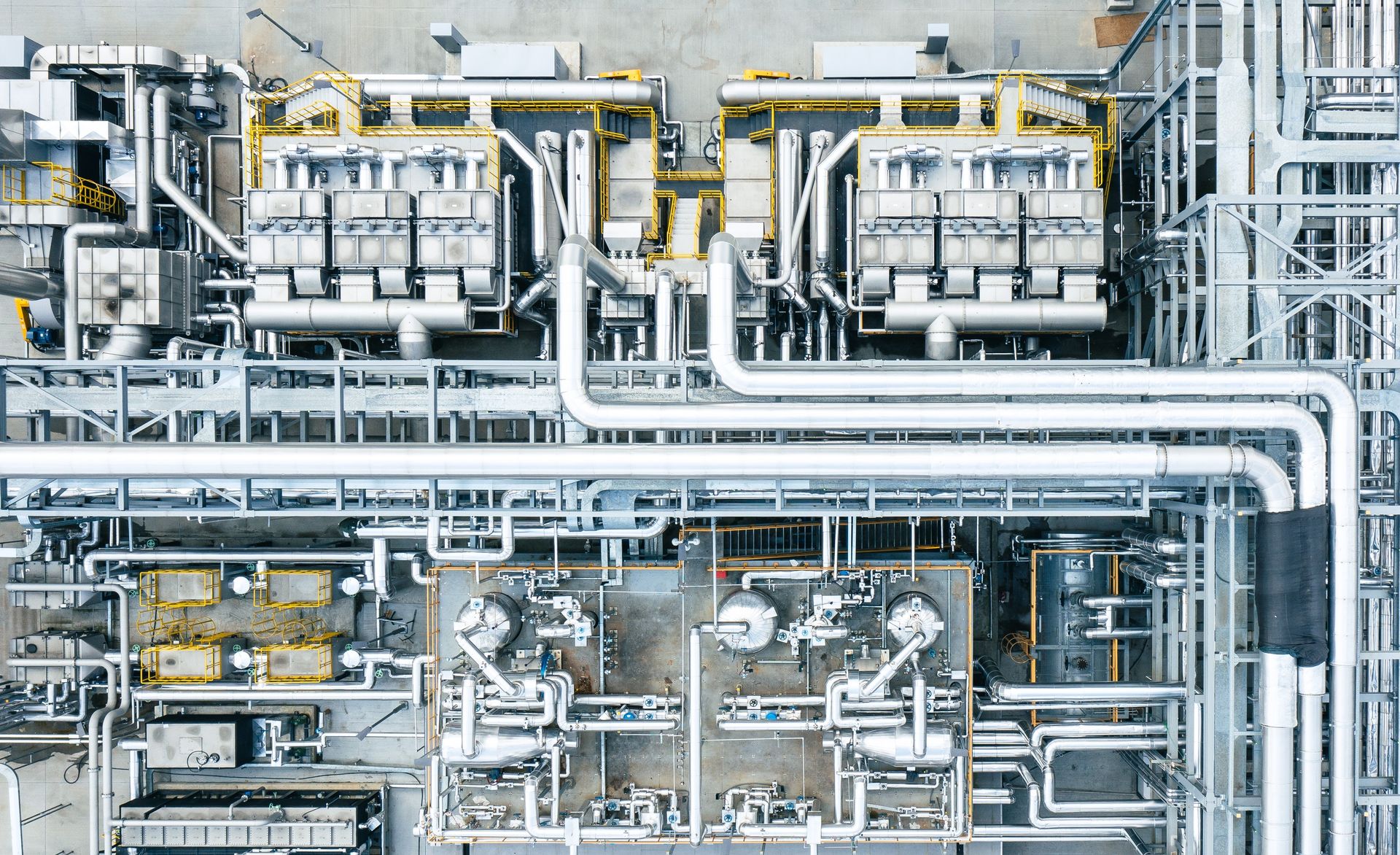
A plant with a correctly specified system still loses energy through the parts of it that are no longer there. Uninsulated valves and flanges, open cladding, crushed sections under pipe supports and wet insulation often account for more loss than any thickness decision.
These losses are invisible in the design documentation and visible in an infrared image in about ten minutes. That is why the survey comes before the engineering, not after it.
Produced under your document control procedure, in EPC-level English, revision controlled.
Line and equipment inventory with condition, defect type and photographic record.
Infrared images with surface temperature and calculated loss per component.
Repair items ordered by saving against cost, with the no-regret items identified.
Annual loss before and after, in kW, fuel, CO2 and currency, with payback.
What can be done running, what needs isolation, and what should wait for the turnaround.
As-built record, photographic closure of each defect and updated condition register.
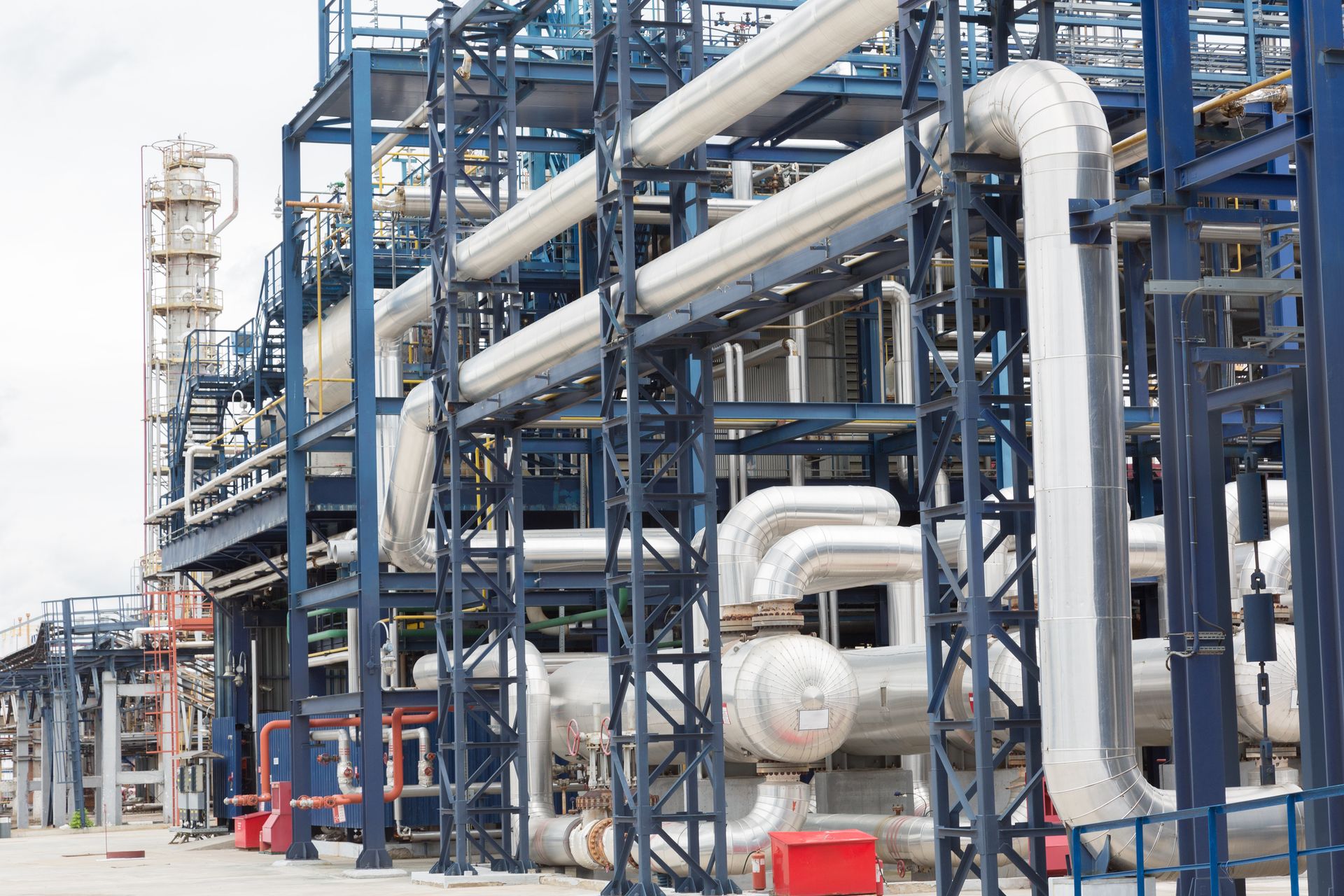
Most insulation maintenance does not need the plant down. Jackets are manufactured off site and fitted during normal operation, cladding is repaired in place, and only the scope that requires isolation or scaffolding in a live area is held for a window.
We split the scope that way at the planning stage, so the turnaround list contains only the work that genuinely cannot be done any other time.
These are the findings that repeat on almost every plant we survey, and the order in which they are usually worth correcting.
Highest loss per square metre on most plants and the fastest payback to correct.
Insulation removed for access and never reinstated, usually around instruments.
Water entry path that turns a thermal problem into a corrosion problem.
Conductivity rises sharply and corrosion under insulation starts beneath it.
Compressed material at pipe shoes and saddles, where it also becomes a thermal bridge.
Legacy systems designed against old energy prices, where an upgrade now pays back.
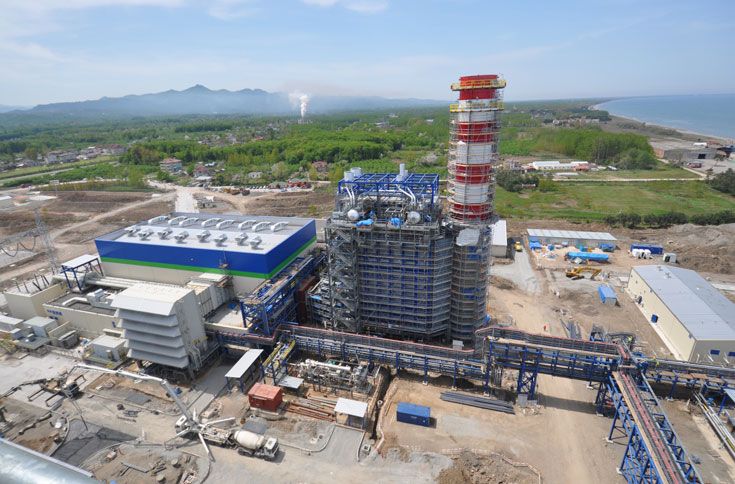
An old system specified against the energy price of its decade is often thinner than today's economic optimum. Where the surface area is large and the operating hours are high, the upgrade pays back faster than most other efficiency measures available on the plant.
We calculate it rather than assert it: current loss, upgraded loss, the cost of the work and the payback at your own energy price, with the sensitivity shown so the number can be challenged.
Since the company was founded we have never used a subcontractor on any job. Survey and repair are carried out by our own qualified and certified personnel, with our own tools and equipment.
That is also why the survey is realistic. The people recording the defect know what it takes to correct it in that access, with that permit regime, in that window.
Industrial Insulation Catalogue
Engineering scope, calculation and documentation services, material families and application capability in a single document.
ERATHERM works as an engineering partner for operators, EPC contractors and equipment manufacturers. Calculation, design, documentation and specification work is delivered remotely under the client's document control procedure; inspection, site supervision and application teams are mobilised to site.
Usually not. Survey, thermographic mapping, jacket manufacture, valve and flange treatment and most cladding repair are done with the plant running. Only scope requiring isolation or heavy scaffolding in a live area is held for an outage, and we separate the two at planning stage.
Loss is calculated per component from the measured surface temperature before the work and recalculated after it, using the same method and the same boundary conditions. A repeat thermographic survey closes the loop and the saving is reported in kW, fuel, CO2 and currency.
Normally uninsulated valves, flanges and fittings, because the loss per square metre is highest there and the work needs no outage. After that, open cladding and wet insulation, because those are corrosion risks as well as thermal ones.
Saturated material is replaced, because its conductivity does not recover and it holds water against the substrate. The important part is finding out why it got wet: replacing it without correcting the vapour barrier or cladding detail simply repeats the failure.
Yes. We work as a specialist contractor under the plant's permit-to-work and HSE regime, and we also train client teams in reinstatement practice where the day-to-day removals are done in-house.
Plant layout, line and equipment list, operating temperatures, energy price and operating hours, any existing survey or thermographic data, and the access and permit constraints that apply.
The detailed pages behind each part of the scope.
Send the layout, the line list and your energy price; we will quantify the loss component by component and return a ranked repair and upgrade scope with its payback.