
Tender specification preparation
A specification that can be priced without assumptions: scope boundaries, measurement rules, materials by property, workmanship, inspection regime and documentation requirements.

The insulation package is usually tendered late, priced fast and evaluated on total price. That is where the money is lost, because the cheapest bid is almost always the one that assumed the least scope. ERATHERM acts as the owner's engineer through the tender: we write or review the tender specification, qualify the bidders technically, evaluate the bids clause by clause, run the clarification round and build the approved material list, so the award is made on comparable scope rather than on three different interpretations of the same document. We work worldwide, in EPC-level English.

Each package below can be taken on its own. The input we need and the decision you get out of it are defined before the engagement starts.
A specification that can be priced without assumptions: scope boundaries, measurement rules, materials by property, workmanship, inspection regime and documentation requirements.
Technical qualification of contractors against manpower, supervision, previous comparable scope, quality system, HSE record and the ability to mobilise in the project country.
Bid by bid comparison against the specification, with exceptions, qualifications and assumed scope identified and normalised so the prices become comparable.
Technical queries issued and tracked, answers distributed to all bidders on equal terms, and the effect of each answer on the price recorded.
Material families and compliant manufacturers approved on technical grounds, with the evidence required for a substitution defined in advance.
A scored technical recommendation with the commercial normalisation set out, the residual risks named and the conditions that should be carried into the contract.
Where ERATHERM may bid for the execution of the same scope, we either decline the owner's engineering role or are excluded from the bidder list in writing, at your choice.

Insulation bids rarely differ because one contractor is cheaper. They differ because one measured the scope net and another gross, one allowed for scaffolding and another did not, one priced the specified material and another a substitute.
Evaluation starts by making the scopes identical on paper. Only after normalisation does the price difference mean anything, and in our experience the ranking changes more often than it stays the same.
Produced under your document control procedure, in EPC-level English, revision controlled.
Specification, drawings, bill of quantities, pricing schedule and bidder questionnaire.
Bidder assessment against technical, quality, HSE and capacity criteria.
Clause by clause comparison, exceptions register and normalised price basis.
Queries, answers, issue dates and the price effect of each clarification.
Approved families and manufacturers with the technical basis and substitution route.
Scored ranking, residual risk register and the conditions to carry into contract.

An award made on a normalised scope still has to be held there. We review the contractor's method statements and material submittals, witness the hold points agreed in the inspection and test plan, and assess variation claims against the tender basis we wrote.
Progress is measured against the quantities as measured, not as claimed, and the documentation required for acceptance is tracked from the first week rather than assembled at handover.
The role changes with the phase of the project. Each engagement below has a different deliverable and a different level of involvement.
Independent quantity take-off and cost estimate before the scope is committed.
Specification, bill of quantities and tender documentation ready for issue.
Technical evaluation, clarification management and award recommendation.
Review of the contractor's or EPC's insulation design against the specification.
Hold point attendance, submittal review, progress measurement and quality file control.
Technical assessment of variation claims, defect causes and remedial scope.
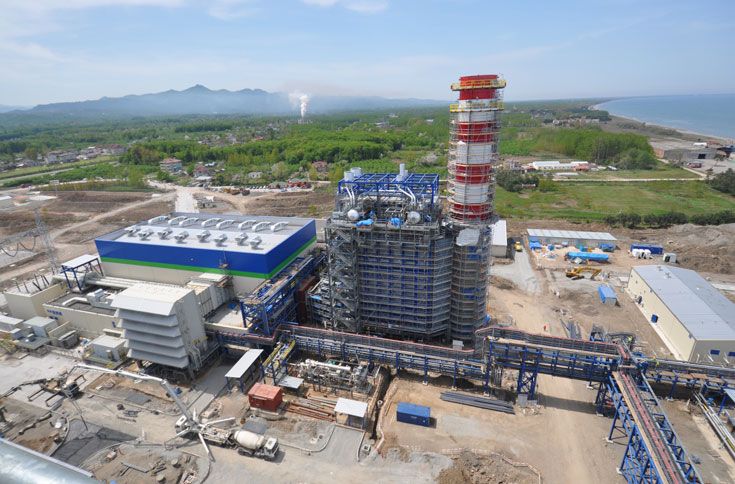
Insulation is typically a low percentage of plant capital cost and a high percentage of avoidable energy loss. A specification that buys the wrong thickness commits the plant to that loss for its operating life, and no amount of maintenance recovers it.
The second cost is slower: a system that traps moisture produces corrosion under insulation, and the repair happens during a turnaround, at turnaround rates, on equipment that cannot be taken out of service any other time.

We have delivered insulation scope as a contractor on refinery, petrochemical and power projects for two decades, with our own qualified and certified personnel and without ever using a subcontractor.
That is why the evaluation is realistic. We know which allowances a bidder has left out, which productivity figures cannot be achieved in that access, and which clauses are routinely priced at zero and claimed later.
Industrial Insulation Catalogue
Engineering scope, calculation and documentation services, material families and application capability in a single document.
ERATHERM works as an engineering partner for operators, EPC contractors and equipment manufacturers. Calculation, design, documentation and specification work is delivered remotely under the client's document control procedure; inspection, site supervision and application teams are mobilised to site.
Yes. We evaluate against whatever document was issued, and the first output is usually a list of the clauses in that document that allowed the bidders to differ. That list is also the basis for the clarification round.
Either ERATHERM is excluded from the bidder list in writing, or we decline the owner's engineering role. The choice is yours and it is made before the engagement starts, not after the bids arrive.
We normalise the technical scope and set out the commercial consequence of each exception. The commercial decision stays with you; our recommendation is scored on technical compliance, capacity and risk.
It separates the specification from the market. The specification states properties and test methods; the approved material list names the families and manufacturers that meet them, and can be revised when availability changes without reissuing the specification.
Yes. We assess variation claims and defect causes against the contract documents and the physical evidence, and issue a technical opinion with the measurement and calculation behind it.
The issued tender documents, the bids as received including all qualifications and exceptions, the correspondence to date, and your evaluation criteria if they are already fixed.
The detailed pages behind each part of the role.
We will tell you which clauses will be priced around, what the bids will differ on, and what the evaluation will need in order to compare them on the same scope.