Cold box perlite filling design
Fill density, settlement allowance, top-up strategy, compaction behaviour during cooldown and the casing load the filled column imposes.
An air separation cold box is one of the few insulation systems that is loaded once and then never inspected again. Perlite settles, moisture finds any break in the purge gas envelope, and a cold bridge at a support shows up years later as frost on the casing and as lost production. ERATHERM engineers ASU cold box and distribution insulation from the oxygen compatibility requirement outward: material selection for LOX service, perlite filling and settlement allowance, purge gas management, vacuum systems where they apply and the cold bridge audit behind the heat leak budget. We work worldwide, in EPC-level English.

Each package below is defined by the part of the plant it protects and by the failure mode that governs it. They can be contracted separately or as one scope.
Fill density, settlement allowance, top-up strategy, compaction behaviour during cooldown and the casing load the filled column imposes.
Dry nitrogen purge envelope, casing sealing, pressure and dew point monitoring, and the penetrations through which moisture actually enters.
Cold and cryogenic distribution piping from the cold box to storage and to the user, with vapour barrier continuity and support detailing designed before the material is chosen.
Material, adhesive, sealant and cladding selection reviewed for oxygen service, with cleanliness requirements and prohibited materials identified in writing.
Vacuum-jacketed transfer lines, standoffs, pump-out and getter arrangement, and the thermal shorts that dominate the heat budget on short runs.
Heat in-leak summed path by path across supports, nozzles, instruments and penetrations, compared against the plant's energy and production figures.
In oxygen service the compatibility requirement overrides thermal optimisation. Material selection is justified against the cleanliness and ignition requirements before conductivity is considered.
Expanded perlite is poured as a free-flowing powder and then behaves like a settling solid. It compacts during cooldown, it consolidates under its own weight over years, and it exerts lateral load on the casing as it does so.
A fill design that ignores settlement produces a void at the top of the column, which is exactly where the cold surfaces are, and a casing design that ignores lateral load produces distortion at the panel joints where the purge envelope is supposed to be sealed.
Produced under your document control procedure, in EPC-level English, revision controlled.
Heat in-leak by path, cold surface conditions and the energy consequence.
Perlite grade, density, filling method, settlement allowance and top-up procedure.
Oxygen service assessment with prohibited materials and cleanliness requirements.
Layer build-up, vapour barrier strategy and support detailing for LOX, LIN and LAR lines.
Supports, penetrations, terminations, purge connections and jacketed interfaces.
Fill verification, purge integrity, continuity checks and cooldown monitoring.
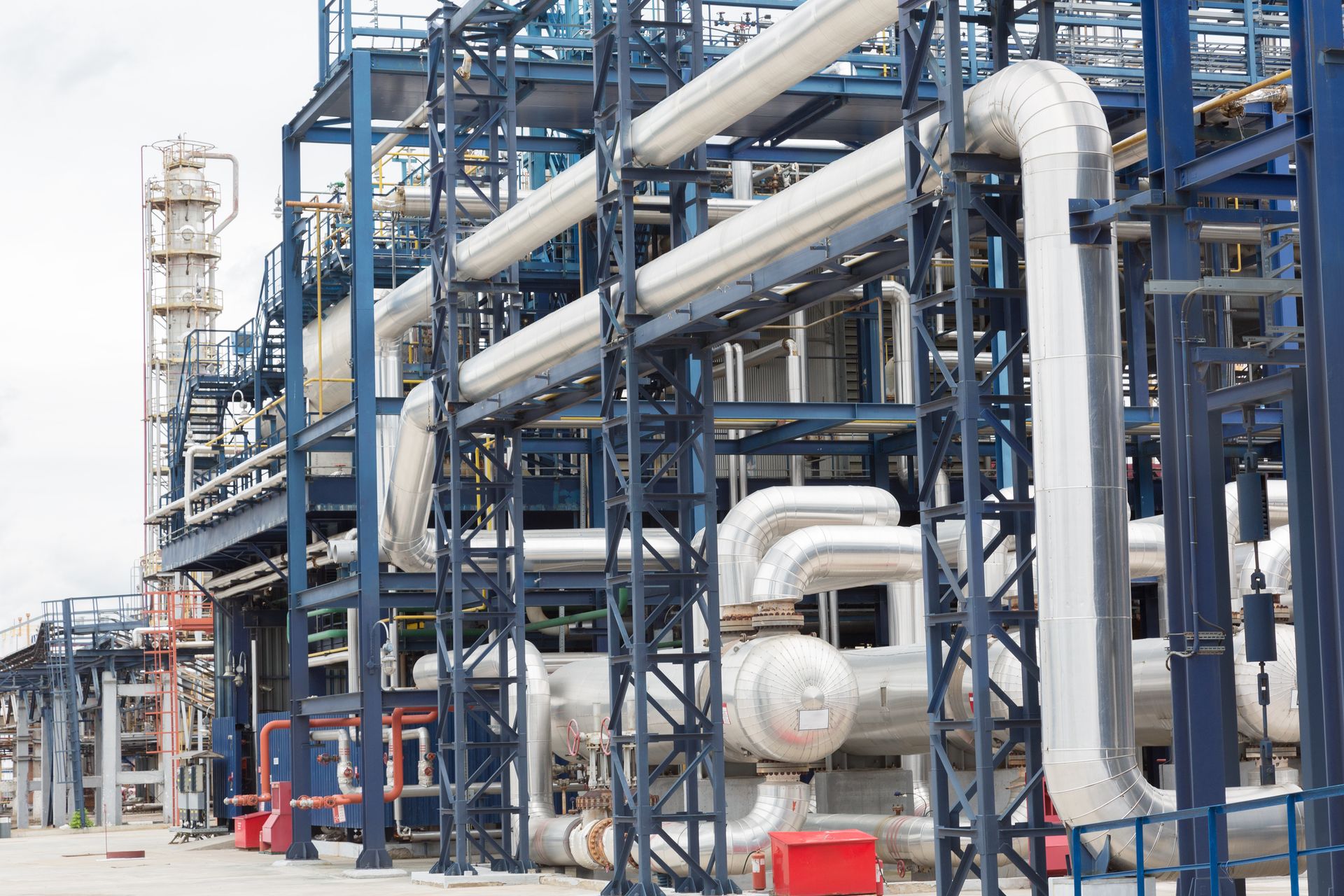
Cold box insulation is protected by the casing and the purge. Distribution piping is not: it sits outdoors, it cycles, it is walked on and it is modified. Most of the cryogenic insulation failures we are called to assess are on the lines, not in the box.
The design answer is continuity. A vapour barrier that is terminated correctly at every support, valve and instrument survives; one that is interrupted at a single pipe shoe draws moisture in and turns into ice and corrosion within a season.
The same plant contains several different design problems. Each is handled against the criterion that actually governs it.
Perlite fill, settlement and purge gas envelope integrity govern.
Material compatibility and cleanliness override thermal optimisation.
Cold bridging and air condensation on cold surfaces govern the detailing.
Storage and transfer losses govern, with boil-off measured against the guarantee.
Thermal shorts at standoffs and penetrations dominate the heat budget.
Condensation control and personnel protection govern rather than energy.

Oxygen-enriched atmospheres change the question. Organic materials that are entirely routine in nitrogen service become an ignition risk, and residues of oil, grease or adhesive that would be irrelevant elsewhere become a hazard.
We treat compatibility and cleanliness as the first filter, document the prohibited material list with the project, and only then optimise the surviving families on thermal grounds.

Since the company was founded we have never used a subcontractor on any job. Cryogenic work is carried out by our own qualified and certified personnel, with our own tools and equipment.
Cold box filling and cryogenic line work are unforgiving of improvisation: fill rate, handling, sealing and barrier lap are all decided by the crew, and none of them can be corrected once the casing is closed.
Industrial Insulation Catalogue
Engineering scope, calculation and documentation services, material families and application capability in a single document.
ERATHERM works as an engineering partner for operators, EPC contractors and equipment manufacturers. Calculation, design, documentation and specification work is delivered remotely under the client's document control procedure; inspection, site supervision and application teams are mobilised to site.
Expanded perlite consolidates under its own weight and compacts further during the first cooldown. If the fill is designed to the nominal volume only, a void forms at the top of the column where the cold surfaces are, and heat leak increases. The fill design includes a settlement allowance and a top-up route.
Almost always a break in the purge gas envelope: an unsealed penetration, a distorted panel joint or a failed instrument gland. Once moisture enters it freezes on the cold surfaces, and the ice both increases heat leak and loads the casing. The purge pressure and dew point monitoring regime is part of the design.
Selection is made against the project's oxygen compatibility and cleanliness requirements, which typically exclude many organic materials, adhesives and residues that are routine in nitrogen service. We issue a prohibited material list with the specification rather than leaving it to site judgement.
Yes. Jacket interfaces, support standoffs, pump-out ports and getter arrangement are designed as part of the heat leak budget, with the thermal shorts identified explicitly rather than absorbed into a margin.
Yes. Frost patterns, casing temperature survey, purge records and production figures are assessed together to locate the ingress or the void, and a repair and refill scope is issued with the heat leak calculation behind it.
Cold box general arrangement and casing details, column and vessel schedule, line list with operating temperatures, purge gas arrangement, any boil-off or energy guarantee, and the project specification where one exists.
The detailed pages behind each part of the scope.
Send the cold box arrangement, the line list and the operating record; we will locate the heat leak, define the design or repair basis and set out the deliverables and schedule.