
Silencer internals
Absorptive fill selection, density and retention behind perforated sheet, chosen for the gas temperature and velocity as well as the acoustic duty.

An exhaust silencer has to attenuate noise and survive the gas temperature at the same time, in a duct that expands, vibrates and is often outdoors. The acoustic fill has to stay in place and stay clean, the thermal layer has to keep the casing safe, and the two compete for the same space.

Engine, turbine and test facility exhausts share the same problems at different scales. These are the areas the scope normally covers.
Absorptive fill selection, density and retention behind perforated sheet, chosen for the gas temperature and velocity as well as the acoustic duty.
Baffle geometry, fill retention and the erosion protection that keeps fill out of the gas stream over the life of the unit.
Thermal insulation on the external casing for personnel protection and heat rejection, detailed around the expansion the duct actually sees.
High velocity, cyclic thermal loading and strict noise limits at the same time, where the fill retention problem is at its most severe.
The commonest long term failure is acoustic fill working loose and leaving the baffle. The unit stays intact, the noise rises and nobody connects the two until a survey finds it. Retention detailing is what prevents it.
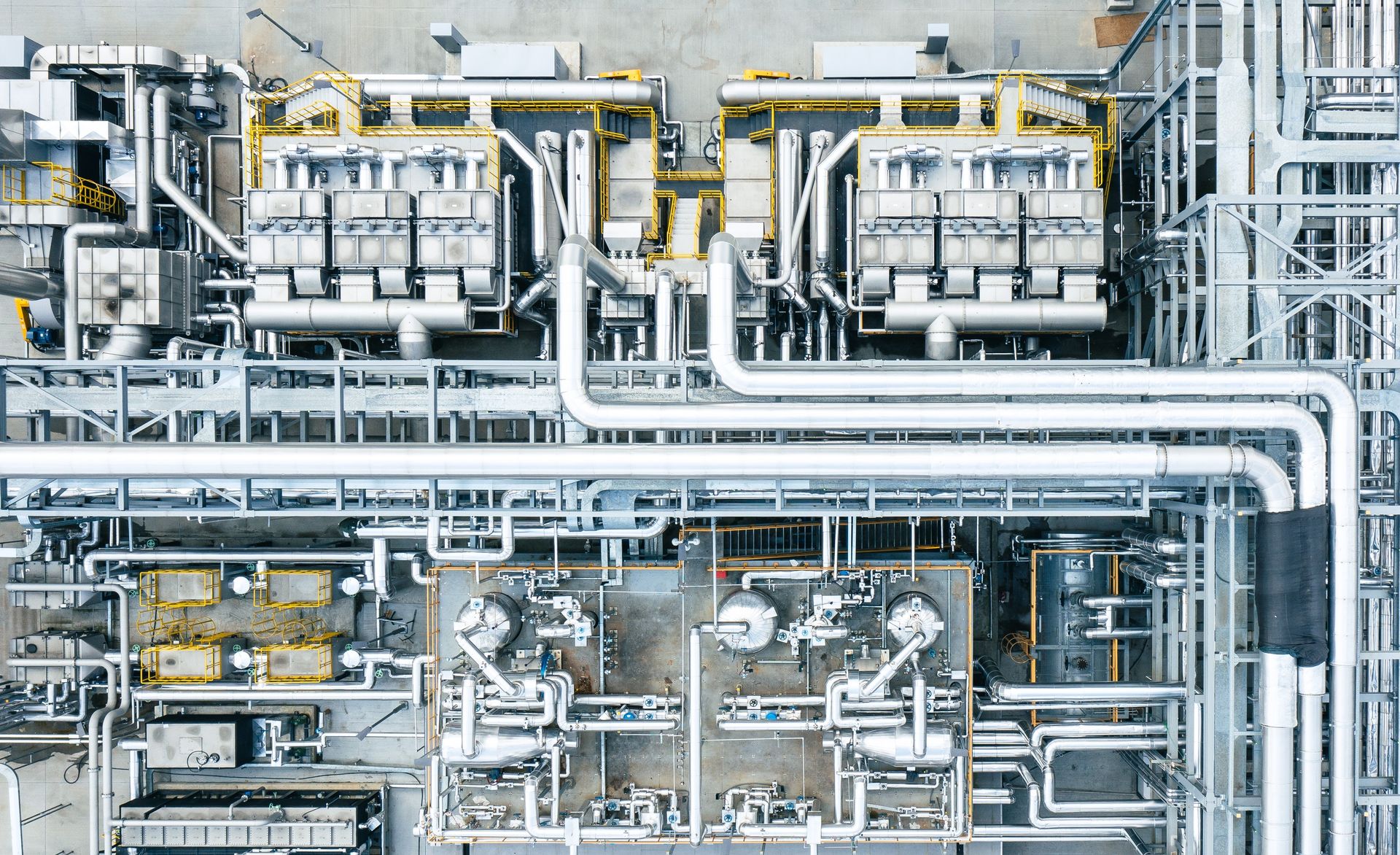
We take the acoustic requirement by octave band and the thermal duty from the gas condition, then resolve them as one build-up: fill depth and density set by the acoustic requirement, material grade set by the temperature, and retention set by the gas velocity.
Suitable for a new unit or for refurbishing an existing silencer whose performance has dropped.
Attenuation by band, fill specification and casing temperature check.
Fill grade, density, facing, perforate and retention, with temperature limits.
Baffle construction, retention, expansion provision and casing insulation.
Quantities and grades, suitable for enquiry and for fabricator comparison.
For existing units: what to strip, what to reuse and what to replace.
What to check at fabrication and what to monitor in service.
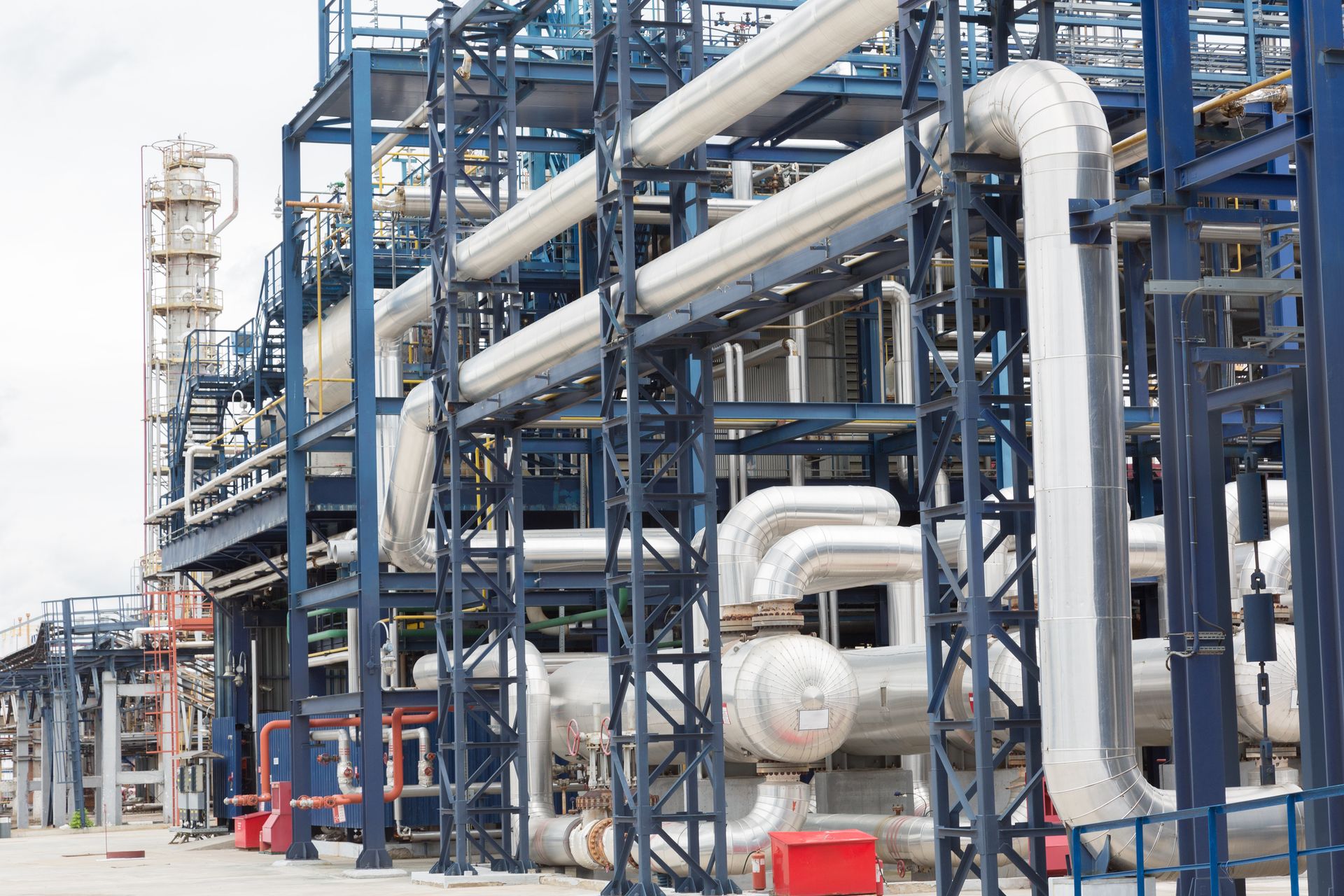
Engine test cells, wind tunnels and propulsion test stands combine high gas velocity, rapid thermal cycling and noise limits set by the surrounding site. Fill retention that is adequate for a continuous-duty power plant silencer is not adequate under cyclic loading at high velocity.
Industrial Insulation Catalogue
Engineering scope, calculation and documentation services, material families and application capability in a single document.
ERATHERM works as an engineering partner for operators, EPC contractors and equipment manufacturers. Calculation, design, documentation and specification work is delivered remotely under the client's document control procedure; inspection, site supervision and application teams are mobilised to site.
Fill migration and fill contamination. Acoustic fill that works loose behind the perforate leaves voids, and fill that becomes oil-soaked or packed stops absorbing. Neither is visible from outside, which is why the noise rise is usually blamed on the source rather than on the silencer.
Often, and it is usually the better economics. The casing is normally sound; it is the internals that have degraded. We survey the unit, measure the current attenuation where possible, and scope the refill and retention upgrade against the cost of a new unit.
By letting each govern what it should. Fill depth and density follow the acoustic requirement; material grade follows the gas temperature; casing insulation thickness follows the surface temperature limit. Conflicts are resolved explicitly in the report rather than by compromising both.
Yes, and most of that work is under non-disclosure agreement, so specific programmes are not published. The technical scope can be discussed once an NDA is in place.
Exhaust systems sit where the acoustic and thermal scopes overlap.
Systems and materials
Cryogenic insulation systems Cryogenic system design Acoustic insulation and noise control Exhaust silencer and baffle systems Material library Corrosion under insulationWe will resolve the acoustic and thermal duties into one build-up and detail the retention that keeps it performing beyond the first few thousand hours.